
Using AI in Competitive Analysis to Stay Ahead
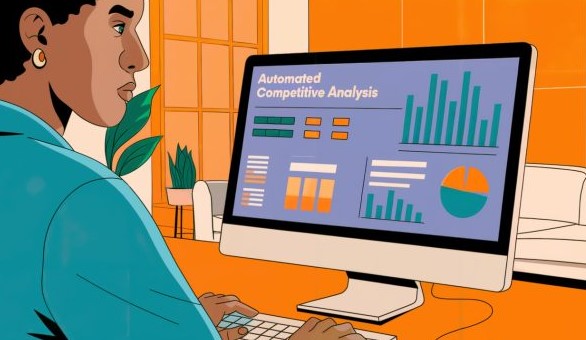
Source:https://www.trymaas.com
Three years ago, I sat in a “War Room” with a retail client who was losing market share faster than a leaking bucket loses water. We spent forty-eight man-hours manually scouring competitor websites, reading glassdoor reviews, and tracking pricing changes in a massive, soul-crushing Excel sheet. By the time we finished the report, the competitor had already launched a new discount campaign that made our data obsolete. We were fighting a digital war with wooden swords.
Today, that same process takes exactly ninety seconds. In my decade of business consulting, I’ve seen many “game-changers,” but nothing compares to the shift brought by AI in competitive analysis. If you are still manually “checking in” on your rivals, you aren’t just behind—you are invisible.
In this deep-dive, we’re moving past the ChatGPT basics. I’m going to show you how to build a digital “radar system” that predicts your competitor’s next move before they even make it.
The “Radar vs. Telescope” Analogy
To understand AI in competitive analysis, think of the difference between a telescope and a modern radar system.
Manual analysis is like a telescope. You have to know exactly where to point it, it only sees one thing at a time, and if a cloud (or a busy work week) gets in the way, you see nothing. AI is a radar. It scans 360 degrees, 24/7, through the “clouds” of big data. It doesn’t just show you where the competitor is; it calculates their trajectory and alerts you the moment they change course.
1. Automated Sentiment Analysis: Reading Between the Lines
One of the most powerful LSI keywords in this niche is Natural Language Processing (NLP). AI doesn’t just read words; it understands “vibe” at scale.
In my practice, I use AI to scrape thousands of a competitor’s customer reviews across Reddit, Trustpilot, and G2. Instead of reading them one by one, the AI provides a Sentiment Map.
-
The Insight: We recently discovered a rival’s “feature update” was actually causing massive frustration regarding UI lag.
-
The Move: My client launched a targeted ad campaign highlighting their own “Lightweight and Lightning Fast” interface.
-
The Result: A 12% jump in customer acquisitions from that specific competitor in one month.
2. Dynamic Pricing and Real-Time Benchmarking
If you are in e-commerce or SaaS, pricing is a moving target. Using AI in competitive analysis allows for Predictive Pricing Models.
AI tools can track a competitor’s price fluctuations and correlate them with external events—like holidays, stock levels, or even local weather patterns. This allows you to set Automated Triggers.
Analogy: It’s like having a professional poker player whispering in your ear, telling you exactly when your opponent is bluffing and when they are about to go all-in.
3. SEO and Content Gap Analysis at Warp Speed
In the old days, Search Engine Optimization (SEO) competitive research meant manually comparing keyword rankings. Now, AI-driven platforms can perform a Content Gap Analysis in seconds.
By feeding a competitor’s URL into an AI model, you can instantly identify:
-
The “Hidden” Keywords: What are they ranking for that you didn’t even think of?
-
Backlink Velocity: Are they suddenly getting a surge of links from high-authority tech blogs? This usually signals a major PR push is coming.
-
Topic Authority: Which “content clusters” are they dominating, and where is the “white space” for you to take over?
4. Reverse-Engineering the Competitor’s Tech Stack
One “pro secret” I’ve utilized is using AI to analyze a competitor’s job postings and technical documentation.
If a competitor suddenly starts hiring five Machine Learning Engineers and three Data Privacy Specialists, you don’t need a crystal ball to know they are building an AI-integrated, privacy-first product. AI in competitive analysis can aggregate these “breadcaps” from across the web to give you a clear picture of their future Product Roadmap.
5. Technical LSI Terms You Should Know
To sound like an expert in the boardroom, you need to understand these technical concepts:
-
Machine Learning (ML) Algorithms: The engine that allows AI to improve its predictions over time.
-
Web Scraping & Data Extraction: The process of pulling raw data from the web for AI to analyze.
-
Market Intelligence (MI): The broader category of using data to understand market trends and competitor behavior.
-
Competitive Intelligence (CI): The specific practice of gathering and analyzing information about rivals.
6. Expert Advice: The “Invisible” Danger of AI
Tips Pro: Don’t Forget the “Human-in-the-Loop.” AI is brilliant at finding patterns, but it is terrible at understanding “Context.” For example, an AI might see a competitor’s 50% price drop and signal a “Price War.” A human expert, however, might know that the competitor is simply clearing out old inventory before a total brand shutdown. Use AI for the “Heavy Lifting” of data, but keep a human for the “Final Strategy.”
Peringatan Tersembunyi (Hidden Warning): Data Privacy and Ethics.
In 2026, the legal landscape around Automated Data Collection is tighter than ever. Ensure any tool you use complies with updated “Robots.txt” protocols and data privacy laws. “Scraping” is legal; “Hacking” is not. Never use AI to bypass password-protected areas or non-public data.
7. Scannable Summary for Implementation
If you want to start using AI in competitive analysis tomorrow, follow this checklist:
-
[ ] Identify 3 Main Rivals: Don’t try to track the whole world. Focus on your direct threats.
-
[ ] Select a Tool: Look for platforms that offer Real-Time Alerts rather than static reports.
-
[ ] Monitor “Social Listening”: Track what people say about them when they think the brand isn’t listening.
-
[ ] Track Talent Moves: Use AI to watch their LinkedIn hiring patterns for clues on future pivots.
-
[ ] Analyze Ad Spend: See which keywords they are “buying” versus which they are “earning” organically.
Conclusion: The New Barrier to Entry
In the business world of 2026, information is no longer a luxury—it’s a commodity. The real competitive advantage lies in the speed of insight. By integrating AI in competitive analysis, you stop reacting to the past and start preparing for the future.
You don’t need a million-dollar budget to do this. You just need the curiosity to stop looking through the telescope and start building your radar.
If you could have a “live feed” of one specific metric from your biggest competitor, what would it be? Their daily sales? Their customer churn rate? Their R&D budget? Share your thoughts below, and let’s discuss how you can find that data using the tools available today!