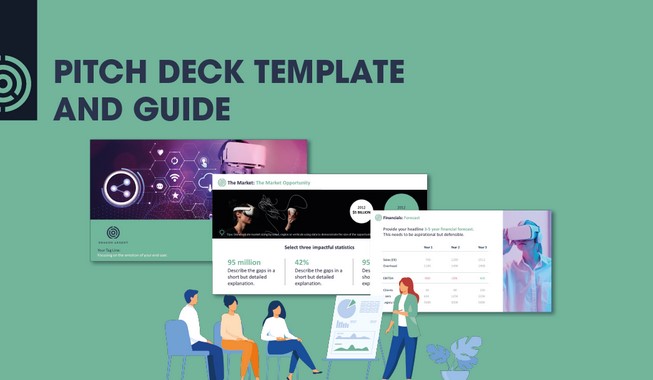
Investor Pitch Slide Guide: What to Include

Source:https://images.squarespace-cdn.com

You have spent the last eight months working 80-hour weeks, surviving on cold coffee, and writing thousands of lines of proprietary code to build your dream software. You finally secure a 20-minute meeting with a top-tier venture capital firm. You open your laptop, sweat dripping down your palm, and click open a 45-slide presentation packed with dense walls of text, complex architectural diagrams, and exhaustive engineering spreadsheets. By slide four, the managing partner is covertly checking their phone under the table. You lost the room before you even got to your financial projections.

In my ten years of sitting on both sides of the fundraising table—as a founder raising capital and as an advisor auditing early-stage startups—I have watched this exact heartbreak happen to brilliant teams. Founders often treat a presentation like a technical instruction manual, completely forgetting that its primary goal is not to close the deal on the spot, but to build enough excitement to secure a follow-up meeting. The harsh reality of venture capital is that investors review hundreds of decks a week and make a preliminary decision to pass or move forward in less than four minutes.

Mastering a streamlined investor pitch slide guide is what separates founders who raise millions from those who perpetually run on an empty runway. It is the architectural art of stripping away the operational noise and presenting a concise, undeniable narrative of growth and market opportunity. Let’s look past the generic fundraising advice and break down the exact structural framework your deck needs to command the room.

The Narrative Architecture of Fundraising

Think of your presentation deck like a highly compelling movie trailer. A movie trailer doesn’t show the full two-hour script, explain the detailed camerawork, or reveal every single plot twist. Instead, it highlights the high-stakes conflict, introduces the unforgettable main characters, showcases the visual spectacle, and ends with a cliffhanger that forces the audience to buy a ticket to find out what happens next.

Your corporate presentation requires the exact same level of curated storytelling. Your slides must seamlessly guide an investor through an emotional and financial journey. It needs to establish a painful market problem, introduce your product as the undeniable hero, quantify the massive financial upside, and prove that your team has the exact skills required to win the race.

When you shift from an information-dump mindset to an investor-centric framework, your meetings completely change character. You stop pitching and start inviting a strategic partner into a highly lucrative growth engine.

The Essential Slide Blueprint Every Deck Must Contain

To maximize your fundraising efficiency, your presentation should rarely exceed 10 to 12 highly visual, impact-driven slides. Every single slide must earn its place by answering a core question that venture capitalists care about.

Slide 1: The Vision and Elegant Core Proposition

Do not waste your opening moments talking about your corporate history or listing your office locations. Use this slide to introduce your brand logo and state your one-sentence core value proposition.

This sentence should serve as an immediate anchor for the reader. Use clear, high-impact phrasing that describes exactly what your business builds and who it solves a problem for, setting a professional, focused tone for the rest of the presentation.

Slide 2: The Quantifiable Market Pain Point

This is where you build the foundation of your investment thesis. Clearly define the deep operational friction, hidden costs, or regulatory headaches that your target demographic faces every single day.

Avoid broad, vague generalizations like “Everyone hates bad software.” Instead, present compelling industry data or specific customer discovery quotes that prove the market is actively suffering and desperately looking for a better alternative.

Slide 3: The Product Solution and Unfair Advantage

Introduce your software or technology as the definitive answer to the pain point you just established. Show high-quality product mockups or a clean user interface screenshot rather than complex backend infrastructure diagrams.

Focus entirely on the transformation: how much faster, cheaper, or more efficient is a customer’s workflow after onboarding your platform? Highlight your unique IP, proprietary data pipelines, or network effects that establish your competitive moat.

Slide 4: The Total Addressable Market (TAM) Opportunity

Investors need to know that your business has the structural runway to scale into a massive enterprise. Break down your market size using a rigorous, bottom-up calculation method.

  • Total Addressable Market (TAM): The absolute maximum revenue opportunity available if your company achieved 100% market share globally.

  • Serviceable Addressable Market (SAM): The specific geographic or demographic segment of the market that fits your current product capabilities.

  • Serviceable Obtainable Market (SOM): Your immediate operational target—the realistic percentage of the SAM you can capture within the next 3 to 5 years.

Slide 5: The Monetization and Business Model Design

Clearly explain how your enterprise actually prints money. Outline your exact pricing architecture, whether you utilize a hybrid subscription model, usage-based pricing tiers, or transaction-based microfees.

Detail your unit economics here. Show that you have a deep understanding of your gross margins, your target Customer Acquisition Cost (CAC), and how you plan to maximize Customer Lifetime Value (LTV) over time.

Slide 6: The Operational Go-To-Market Strategy

A brilliant product is completely useless without a repeatable, scalable distribution engine. This slide must outline your exact customer acquisition strategy.

Detail your primary marketing channels, whether you rely on an inside sales development representative (SDR) pipeline, organic search engine optimization (SEO), performance marketing, or strategic enterprise channel partnerships. Prove to the investor that you know exactly how to find and close users efficiently.

Slide 7: Current Traction and Growth Velocity

This is the single most important slide for modern institutional investors. It acts as the ultimate proof that you are building something the market actually wants.

Use clean, unmistakable line charts to show your month-over-month growth in Monthly Recurring Revenue (MRR), active user retention curves, or pilot program sign-ups. If you are pre-revenue, showcase your letters of intent (LOIs), pending regulatory approvals, or successful beta testing engagement metrics.

Slide 8: The Dream Team and Founder-Market Fit

Investors invest in execution capability far more than raw ideas. Highlight the core executive leadership team, showcasing their past exits, relevant corporate background, and unique technical expertise.

Prove exactly why this specific group of human beings is uniquely qualified to build this enterprise and out-maneuver any competitor who tries to copy your business model.

Slide 9: Financial Forecasts and the Capital Ask

Present a clean, high-level 3 to 5 year financial projection chart that tracks your expected revenue scaling, gross margins, and hiring trajectories.

Conclude with your explicit capital ask. Clearly state how much money you are raising in this round, what financial instruments you are utilizing (e.g., equity or a SAFE note), and provide a clear breakdown of how those funds will be deployed across product development, marketing, and operational talent acquisition over the next 18 months.

Striking the Balance Between Visual Design and Financial Precision

The most common operational mistake I see early-stage founders make is overloading their pitch materials with chaotic design elements, conflicting color palettes, and random bullet points.

Your presentation materials should look like a premium luxury brand. Use a clean, minimalist design with plenty of white space, consistent typography, and a stark contrast between text and background colors to ensure the deck is easily scannable on mobile devices.

Every single slide should focus on a single, core message. If a slide contains more than three bullet points or requires a magnifying glass to read the chart labels, your layout is too complex. Strip the secondary data points out of the main deck and move them into a comprehensive appendix section that you can access during the Q&A segment of your investor meeting.

Tips Pro: Never include a generic, non-binding timeline slide that promises a specific, guaranteed exit event like an IPO or an acquisition by a specific tech giant in exactly 24 months. It signals a naive understanding of market cycles to seasoned venture capitalists. Instead, focus entirely on building a highly profitable, self-sustaining corporate machine. If you scale the core metrics flawlessly, liquidity events will naturally take care of themselves.

Preparing Your Venture for Capital Efficiency

Mastering a highly strategic presentation framework entirely alters your corporate trajectory. It eliminates the exhausting, endless cycle of unreturned cold emails and elevates your business into a high-impact investment asset that commands serious attention from institutional capital.

By building a presentation that prioritizes clear narrative velocity, verified market traction, and rigorous financial foundations today, you protect your executive time and secure the runway your enterprise needs to dominate its niche.

What does your current fundraising material look like right now? Is your deck a cluttered repository of technical specifications, or are you ready to structure an elegant, high-converting narrative that leaves investors eager to learn more? Let’s break down your biggest presentation hurdles and capital targets in the comments section below!

Preparing for Investor Q&A Sessions with Confidence

Source:https://www.confideleap.com

For any entrepreneur or business leader, engaging with potential investors is one of the most critical steps in securing funding for growth. One of the most intimidating parts of the process is the investor Q&A preparation, where investors will ask probing questions to assess the viability and potential of your business. A successful Q&A session can be a game-changer, while a poorly handled one can result in missed opportunities. However, with proper preparation and the right mindset, you can tackle these sessions with confidence and impress potential investors. This article will explore strategies for preparing for investor Q&A sessions, helping you navigate tough questions and present your business in the best light possible.

1. Understanding the Importance of Investor Q&A

Before diving into the specifics of investor Q&A preparation, it’s essential to understand the significance of this interaction. The Q&A session is often the final hurdle before an investor commits to funding your business. Investors want to ensure that their money is going into a venture with a solid foundation, clear strategies, and capable leadership. The questions they ask can span various areas, including your business model, growth projections, market conditions, competition, and even your personal vision for the future.

While it can be intimidating, investor Q&A is not just a test—it’s an opportunity for you to demonstrate your deep understanding of your business, its challenges, and its potential. A well-prepared entrepreneur who can speak confidently about every aspect of their business is more likely to gain investor trust and close deals.

A. The Investor’s Perspective

From an investor’s standpoint, the Q&A session serves as a crucial tool for evaluating the risks and rewards of investing in your business. Investors are typically looking for a combination of:

  • Market Opportunity: Is there a clear demand for your product or service?
  • Business Model: Is your business model scalable, profitable, and sustainable?
  • Management Team: Do you and your team have the expertise and passion to execute the business plan?
  • Financials: Are your financial projections realistic, and is your burn rate manageable?
  • Risk Mitigation: How well have you identified potential risks and planned for them?

Understanding these focus areas can help you anticipate the types of questions you will likely face and prepare responses that demonstrate your readiness and expertise.

2. Key Areas to Focus on During Investor Q&A Preparation

To handle an investor Q&A session with confidence, you need to be prepared for a wide range of potential questions. Below are the key areas to focus on during investor Q&A preparation, ensuring that you’re equipped to respond to any inquiry with clarity and authority.

A. Know Your Financials Inside and Out

One of the most crucial aspects of investor Q&A preparation is understanding your financials thoroughly. Investors will often dig deep into your profit and loss statements, balance sheets, cash flow projections, and assumptions behind your revenue forecasts. Be prepared to explain:

  • Revenue Model: How does your business make money? Are you primarily B2B or B2C? Do you have multiple revenue streams, and how do they complement each other?
  • Cash Flow: How long can your business sustain its operations with the current level of funding? What is your burn rate, and when do you expect to reach profitability?
  • Financial Projections: Are your financial projections based on reasonable assumptions, and can you defend them if questioned? Be ready to explain the rationale behind your growth forecast, pricing strategy, and customer acquisition cost.

Being able to answer financial questions with confidence not only builds credibility but also demonstrates that you have a solid understanding of your business’s financial health and future prospects.

B. Be Ready to Discuss Market Dynamics

Investors will also want to assess the market opportunity for your business. Therefore, it’s critical to have a well-rounded understanding of your market and competition. Key topics to address include:

  • Market Size and Growth: What is the total addressable market (TAM) for your product or service? How fast is the market growing, and how does your business fit into the broader industry landscape?
  • Customer Segmentation: Who are your target customers? Are you focused on a niche market or a broader consumer base? What are the key pain points that your product addresses for each segment?
  • Competitive Landscape: Who are your direct and indirect competitors? What differentiates your product or service from theirs, and how do you plan to defend your market position?

By demonstrating your awareness of the market dynamics, you will show investors that you have a comprehensive strategy for capturing market share and scaling your business.

C. Showcase Your Team and Leadership

The strength of your team is one of the most significant factors in gaining investor confidence. Investors invest not only in ideas but in the people who will bring those ideas to life. Be prepared to discuss:

  • Team Composition: Who are the key members of your team, and what skills do they bring to the table? How do their backgrounds complement each other and make your team uniquely capable of executing the business plan?
  • Leadership Style: How do you manage your team? How do you foster innovation, maintain motivation, and ensure alignment with your business goals?
  • Hiring Needs: Are you planning to expand your team? If so, what positions will you be hiring for, and how will new hires strengthen your business?

Having a clear and compelling narrative about your team’s qualifications and cohesion will reassure investors that your business has the human capital needed to succeed.

3. Mastering the Art of Handling Difficult Questions

Even with thorough investor Q&A preparation, you will likely encounter challenging or uncomfortable questions during your session. How you respond to these questions can make or break the conversation. Here are some tips for handling difficult questions with grace and professionalism:

A. Stay Calm and Collected

Difficult questions are often designed to test your ability to handle pressure. If an investor asks a tough question, stay calm, take a deep breath, and respond thoughtfully. Avoid becoming defensive or overly emotional—investors want to see that you can maintain composure under pressure.

B. Be Honest About Risks and Challenges

Investors know that every business has risks. Instead of avoiding or sugar-coating potential challenges, be open about them. Acknowledge the risks and demonstrate that you have a plan to mitigate them. Investors appreciate entrepreneurs who are self-aware and can identify and manage potential issues before they become problems.

C. Provide Data to Back Up Your Claims

Whenever possible, back up your answers with data and facts. Whether it’s customer feedback, industry reports, or financial data, hard evidence adds credibility to your claims. Being able to reference specific numbers or studies demonstrates that your business decisions are based on sound reasoning rather than gut feeling.

D. Know When to Pivot and Offer Solutions

If you don’t know the answer to a question immediately, it’s okay to admit it. What matters is your ability to pivot and provide a solution. You can say something like, “That’s a great question. I don’t have the exact figure right now, but I will follow up with that information after this meeting,” or offer a strategy for how you will find the answer moving forward. This shows that you’re resourceful and committed to finding solutions.

In conclusion, investor Q&A preparation is key to navigating the often-intimidating process of securing funding. By understanding the types of questions investors are likely to ask and preparing thoroughly, you can approach the Q&A session with confidence. From knowing your financials to demonstrating a solid understanding of your market and team dynamics, every aspect of your business should be prepared for scrutiny. Most importantly, staying calm, being transparent, and offering well-thought-out answers will help build trust with investors, increasing the likelihood of a successful partnership. By mastering the art of the investor Q&A session, you can position your business for long-term growth and success.