
Building Carbon Offset Partnerships for ESG Goals
Source:https://www.sugoyaindia.com
A few quarters ago, I stood in front of a room full of institutional investors who were hammering our executive team with questions. They weren’t asking about our quarterly revenue projections or our customer acquisition costs. Instead, they wanted to know one thing: “What is your concrete plan to mitigate Scope 3 emissions by 2030?”
The room went dead silent. Our internal operations were already lean, but our supply chain footprint was massive. We quickly realized that achieving our aggressive net-zero targets internally was mathematically impossible. We needed external leverage.
This is the exact moment many corporate leaders realize that the traditional way of doing business has shifted permanently. To survive and satisfy demanding stakeholders, companies must look beyond their own walls and master the complex world of strategic carbon offset partnerships.
The Reality of ESG: Why You Can’t Go It Alone
For beginners and intermediate professionals navigating Environmental, Social, and Governance (ESG) frameworks, carbon offsetting can feel like a minefield. Many businesses treat offsets as a quick transactional fix—a digital receipt bought off a random website to cover up a messy environmental footprint.
Think of carbon offsetting like maintaining a healthy diet. If you eat fast food for every meal, taking a daily vitamin supplement won’t stop your health from declining. In the business world, you must first do the hard work of reducing your operational emissions (the “healthy diet”).
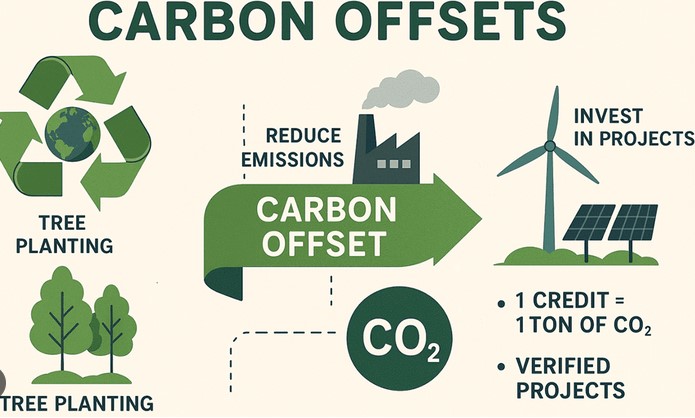
However, for those unavoidable residual emissions, carbon offset partnerships act as the targeted therapy that balances the scale. It is a collaborative alliance between your business and project developers, NGOs, or climate tech innovators to fund certified carbon reduction or removal projects.
+-----------------------------------------------------------------+
|               THE EMISSION REDUCTION HIERARCHY                  |
+---------------------+-------------------------------------------+
| STEP 1: Avoid       | Eliminate emissions at the source         |
| STEP 2: Reduce      | Optimize efficiency (Scope 1 & 2)         |
| STEP 3: Offset      | Partner to neutralize residual footprint   |
+---------------------+-------------------------------------------+
Navigating the Voluntary Carbon Market (VCM)
To build a partnership that stands up to public scrutiny, you need to understand the mechanics of the Voluntary Carbon Market (VCM). This isn’t about regulatory compliance; it’s about voluntary corporate responsibility that builds brand equity.
When evaluating potential partners, you will encounter two main types of carbon credits:
-
Avoidance/Reduction Credits: Funding projects that prevent future emissions, such as building a wind farm instead of a coal plant, or protecting endangered rainforests (REDD+ frameworks).
-
Removal/Sequestration Credits: Funding technology or nature-based solutions that actively suck carbon dioxide out of the sky, such as Direct Air Capture (DAC) or commercial reforestation.
Over my decade in this space, I’ve watched the market shift rapidly toward removal credits. While they are significantly more expensive per metric ton of $CO_2$ equivalent ($tCO_2e$), they carry far less reputational risk and offer much higher integrity for long-term ESG goals.
Step-by-Step Guide to Formulating High-Impact Carbon Offset Partnerships
Building a partnership that delivers genuine environmental impact and bulletproof PR requires a structured approach. Here is the blueprint I recommend to corporate teams looking to establish these alliances.
1. Demand Additionality and Permanence
These are the two golden words in carbon accounting. If your partnership lacks them, your ESG strategy will crumble under the first wave of an independent audit.
-
Additionality means the carbon reduction would not have happened without your company’s financial investment. If a forest was already legally protected by a government, buying credits to “protect” it isn’t additional.
-
Permanence refers to how long the carbon will remain captured. A forestry project faces the risk of wildfires (low permanence), whereas injecting carbon into concrete or deep underground rock formations secures it for thousands of years (high permanence).
2. Vet the Registries Thoroughly
Never buy credits directly from a developer without third-party verification. Your partners must issue credits verified by major international standards such as Verra (Verified Carbon Standard), Gold Standard, or the American Carbon Registry (ACR).
These registries act as the central bank of carbon. They ensure that each credit has a unique serial number, preventing the catastrophic error of “double counting,” where two different companies claim the exact same metric ton of carbon reduction.
3. Align the Project with Your Brand Narrative
The best carbon offset partnerships do more than just balance a spreadsheet; they tell a compelling story that aligns with your corporate DNA.
Pro Tip: Look for projects that offer “co-benefits”—positive impacts that extend beyond carbon capture to satisfy the ‘S’ (Social) and ‘G’ (Governance) in your ESG metrics. For example, a clean cookstove project in a developing nation reduces emissions while simultaneously improving local community health and creating fair-wage jobs for women.
The Greenwashing Trap
Let me give you a blunt warning from the trenches: the reputational damage from a poorly vetted carbon partnership can take years to repair. Regulatory bodies and activist groups are actively hunting for corporate greenwashing.
-
The Vintage Trap: Always check the “vintage year” of the carbon credits. If a partner tries to sell you credits from a project verified in 2015, run away. High-integrity ESG strategies utilize recent vintages (ideally within the last 2-3 years) to reflect modern verification standards.
-
Over-Crediting Risks: Many nature-based projects historically overestimated their baseline conservation impact. Ensure your partner uses updated satellite monitoring (MRV tech—Measurement, Reporting, and Verification) to prove their data is grounded in real-time physics, not optimistic projections.
Turning Your ESG Strategy Into a Competitive Advantage
When done correctly, anchoring your enterprise with robust carbon offset partnerships delivers an incredible return on investment. It positions your brand as a forward-thinking market leader, de-risks your supply chain against future carbon taxes, and opens doors to green capital from top-tier institutional investors.
Begin by calculating your current carbon baseline, identifying your unavoidable residual emissions, and seeking out a registry-verified project developer whose values match your own. Don’t wait for your competitors to corner the market on high-quality carbon credits—the supply of premium, high-integrity removals is shrinking every single day.
What is the biggest hurdle your organization faces when calculating its carbon footprint? Are you leaning toward nature-based solutions or technological removals? Let’s map out the solutions in the comments below!