
How to Overcome Decision Fatigue in Business
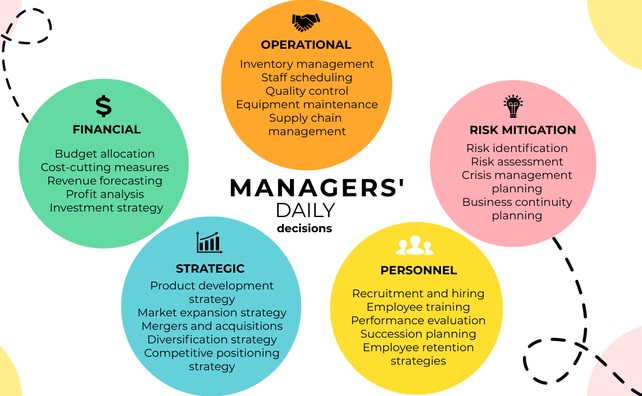
Source:https://blog.tmetric.com
A few years ago, I found myself sitting in my office at 5:30 PM staring at a simple two-paragraph email from my ops manager. It required a basic “yes” or “no” approval regarding a vendor contract change. Earlier that day, I had negotiated a multi-year software licensing deal, resolved a dispute between department heads, and finalized our quarterly hiring roadmap.
Yet, staring at that email, my mind went completely blank. I felt an overwhelming sense of paralysis over a decision that should have taken thirty seconds.
That was the moment I ran straight into the wall of mental exhaustion. Throughout my decade in business leadership, I’ve seen this exact scenario destroy high-performing founders, executives, and managers. Studies show that the average adult makes roughly 35,000 decisions a day, with business leaders carrying the heaviest cognitive load.
When your mental reserve drains, your ability to make sound choices deteriorates rapidly. Finding practical decision fatigue solutions isn’t just about preserving your sanity; it is a critical strategy to protect your company’s bottom line.
The Core Philosophy: Why Your Brain Is Like a Phone Battery
Think of your daily decision-making capacity like a smartphone battery charged to 100% every morning.
Opening a heavy app like strategic financial planning drains 20% of the battery. Choosing what to wear or replying to ten minor chat notifications drains 2% each time. By mid-afternoon, even if you haven’t tackled a major crisis, your cognitive battery is sitting in low-power mode at 5%.
[ High Morning Energy ] --> Strategic Choices & High Value
[ Constant Micro-Decisions ] --> Battery Depletion by 3 PM
[ Decision Fatigue ] --> Impulsive Choices, Avoidance & Mistakes
When leaders run on low cognitive battery, two dangerous behaviors occur: decision avoidance (putting off important choices until they become emergencies) or impulsive decision-making (picking the path of least resistance just to end the discussion).
Implementing systematic decision fatigue solutions helps preserve your high-value cognitive energy for the strategic choices that actually drive business growth.
4 Battle-Tested Decision Fatigue Solutions for Leaders
1. Automate and Eliminate Low-Stakes Choices
The most effective way to save mental bandwidth is to ensure you never make the same routine decision twice. Standardize micro-decisions in both your professional and personal routine.
-
Standardize Daily Routines: Adopt simplified choices for meals, workout schedules, and daily start times to eliminate morning friction.
-
Establish Clear Standing Orders: Give your team explicit parameters to resolve low-cost customer complaints or operational glitches without executive sign-off.
-
Template Routine Output: Use standardized frameworks for project briefs, weekly status reports, and email responses.
Pro Tip: Set an explicit financial threshold for team empowerment. For example, give project managers authority to approve any unexpected operational expense under $500 without asking for leadership review. You will eliminate dozens of micro-interruptions every week.
2. Front-Load Deep Work Using Time-Blocking
Because your willpower and mental clarity are highest in the morning, structure your work calendar around your cognitive peak.
Never start your morning by opening email inboxes or team messaging apps. Checking messages forces your brain into a reactive state, burning through valuable cognitive bandwidth on other people’s priorities.
| Time Window | Operational Focus | Cognitive Load Level | Recommended Activities |
| Morning (8 AM – 11 AM) | Deep Strategic Work | Peak / High Capacity | High-stakes negotiations, product strategy, financial modeling |
| Midday (11 AM – 2 PM) | Collaborative Execution | Moderate Capacity | Team syncs, 1-on-1 coaching sessions, operational reviews |
| Late Afternoon (2 PM – 5 PM) | Administrative Hygiene | Low Capacity | Email processing, approving expense reports, clearing inbox items |
3. Build “If-Then” Decision Frameworks (Standard Operating Procedures)
When faced with recurring operational choices, replace real-time deliberation with pre-determined logic trees.
Instead of debating how to handle late vendor shipments every single time they occur, establish an explicit SOP: “If a vendor shipment is delayed by more than 48 hours without notice, then immediately pause outstanding invoices and activate our backup supplier.”
Pre-built logic eliminates emotional friction and speeds up operational execution across your entire organization.
4. Utilize the Eisenhower Matrix to Delegate Aggressively
If every operational question lands on your desk, your delegation architecture is broken. Categorize incoming tasks using the Eisenhower Matrix to filter what truly requires your personal attention:
-
Urgent & Important: Do immediately (high-stakes strategic issues).
-
Important, Not Urgent: Schedule on your calendar (deep growth planning).
-
Urgent, Not Important: Delegate immediately to team leads.
-
Not Urgent & Not Important: Delete or archive without reading.
Technical Foundations: LSI Keywords and Cognitive Operations
Building a high-throughput management environment requires integrating modern productivity metrics and cognitive frameworks:
-
Cognitive load management and executive function optimization
-
Time-blocking methodologies and asynchronous workflow design
-
Standard Operating Procedures (SOPs) and delegation frameworks
-
Eisenhower Matrix prioritization and context switching reduction
-
Operational bottleneck elimination and managerial productivity
-
Workplace burnout prevention and mindful leadership
Readability Rules for Operational Calendars
When setting up your personal management schedule and team guidelines:
-
Keep focus blocks concise: Limit deep-work blocks to 90 minutes before taking a short mental reset.
-
Bold non-negotiable boundaries: Highlight recurring focus blocks on shared team calendars to prevent meeting overlaps.
-
Group micro-tasks together: Batch all routine approvals into a single 30-minute daily window instead of processing them continuously.
The Hidden Pitfall: What Most Executives Overlook
Hidden Warning: The “Pseudo-Urgency” TrapThe most insidious cause of mental exhaustion in business isn’t hard work—it is context switching caused by pseudo-urgency.When real-time messaging apps ping continuously, your brain treats every incoming notification as a high-priority emergency. This constant shifting between high-level strategy and low-level troubleshooting burns through cognitive fuel at triple speed. Turn off non-essential notifications during deep-work blocks and process team messages asynchronously at set intervals.
Final Thoughts & Action Plan
Finding sustainable decision fatigue solutions isn’t a sign of weakness; it is the mark of a seasoned professional who respects their own cognitive output. When you systematically automate routine choices, delegate low-stakes approvals, and protect your peak mental hours, the quality of your strategic decisions improves dramatically.
Here is your immediate three-step action plan:
-
Audit your daily choices: Identify three minor operational approvals you made this week that could easily be delegated to a team member.
-
Establish a morning focus block: Protect the first 90 minutes of your workday tomorrow for high-stakes strategic work before opening email or chat apps.
-
Set a delegation threshold: Give your key department leads clear financial and operational boundaries to make independent calls without waiting for your green light.
What is draining your mental bandwidth right now?
Are you struggling with constant micro-interruptions throughout the day, or are you feeling overwhelmed by high-stakes strategic choices? Leave a comment below or share your daily management setup—I’d love to trade direct insights and help you streamline your decision-making framework!