
Exploring the Peer-to-Peer Business Model
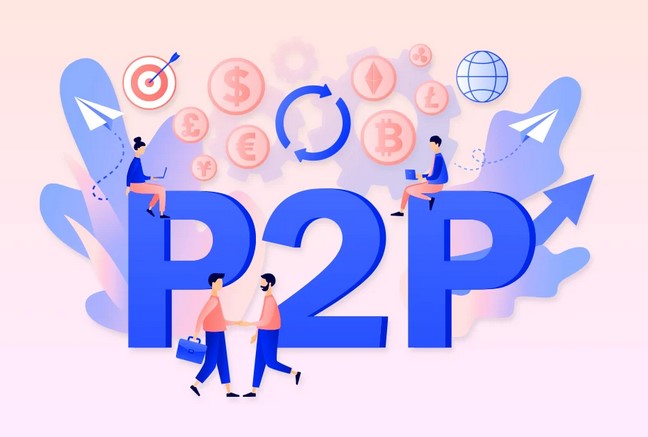
Source:https://www.rentallscript.com
In 2008, if you told a venture capitalist that the next billion-dollar empire would be built on letting strangers sleep in your spare bedroom or hitching a ride in a random person’s Toyota Camry, they would have laughed you out of the room. Yet, today, the “Sharing Economy” is projected to grow to a staggering $335 billion by 2025.
I remember my first brush with this shift back in the early 2010s. I was consulting for a traditional car rental agency that was baffled by the sudden rise of Turo. They couldn’t understand how a platform with zero inventory—no fleet, no garages, no mechanics—was stealing their market share.
That was my lightbulb moment: the power had shifted from the institution to the individual. The peer-to-peer business model isn’t just a tech trend; it is a total dismantling of the traditional “middleman” architecture that has governed commerce for centuries.
The “Digital Matchmaker” Analogy
Think of the peer-to-peer business model like a high-speed, digital matchmaker. In a traditional model, you have a giant warehouse (the business) selling to a customer. It’s a one-way street.
In a P2P model, the “business” doesn’t actually sell a product. Instead, it builds a platform—a sophisticated dance floor—where two people who need each other can find a partner. One person has an underutilized asset (an empty room, a power tool, or a specific skill), and the other person has a temporary need for it. The platform simply provides the music, the lights, and the security at the door.
1. The Core Architecture of P2P Success
What makes a P2P platform work? In my decade of observing these ecosystems, I’ve realized they all rely on three invisible pillars:
-
Asset Liquidity: This model thrives on “unlocking” value from things that are sitting idle. If your lawnmower spends 99% of its life in the shed, a P2P platform turns that idle time into a revenue stream.
-
The Trust Engine: This is the most critical technical component. Since you are dealing with strangers, the platform must provide Two-Way Rating Systems, identity verification, and secure payment escrow.
-
The Network Effect: A P2P business is useless if only ten people are on it. Its value grows exponentially as more “peers” join the network, creating a self-sustaining cycle of supply and demand.
2. Revenue Streams: How “Zero-Inventory” Companies Make Money
One of the biggest questions I get from beginners is: “If they don’t sell anything, how do they get rich?” The beauty of the peer-to-peer business model lies in its low overhead and diversified revenue.
-
Transaction Fees: The most common method. The platform takes a percentage (usually 5–20%) from every successful match.
-
Subscription Tiers: Some platforms charge “Power Sellers” or “Super Hosts” a monthly fee for better visibility or premium tools.
-
Insurance and Protection Plans: Because P2P involves risk, many platforms act as an intermediary for specialized insurance, taking a cut of the premium.
-
Data and Advertising: Once you have millions of people sharing assets, you possess a goldmine of consumer behavior data that brands are desperate to access.
3. The Shift from Ownership to Access
In the old business world, “Success” was owning a house, a car, and a full closet. In the P2P world, “Access” is the new currency. I’ve watched younger generations move away from the burden of maintenance. Why own a $2,000 professional camera that you use twice a year when you can rent one for $50 a day from a local photographer via a P2P site? This shift is forcing traditional retailers to rethink their entire strategy. If people stop buying things because they can just “access” them from their neighbors, the entire manufacturing cycle has to change.
4. Navigating the Legal and Regulatory Minefield
Here is a personal insight: The biggest threat to a P2P business isn’t a competitor; it’s a City Council.
Because the peer-to-peer business model moves faster than the law, it often lands in “Grey Areas.” Is an Airbnb a hotel? Is an Uber driver an employee? These questions have led to billion-dollar legal battles. If you are looking to build or invest in this space, you must account for “Regulatory Risk.” You are essentially disrupting entrenched industries (like taxis or hotels) that have very powerful lobbyists.
5. Building Trust: The “Currency” of P2P
In a decade of business writing, I’ve seen that the “tech” is rarely the part that fails—it’s the Social Contract.
Successful P2P models invest heavily in Community Moderation. If a user has a bad experience with a peer, they don’t just blame that person; they blame the platform. This is why “Trust Indicators”—like verified badges, background checks, and social media integration—are more than just features; they are the literal foundation of the business’s valuation.
Pro Tip: The “Liquidity First” Strategy. > If you are starting a P2P business, don’t try to grow everywhere at once. Focus on a tiny geographic area and ensure you have enough “Sellers” to satisfy “Buyers.” A P2P app with no listings is a ghost town that users will never visit twice.
Essential Vocabulary for P2P Entrepreneurs
To navigate this niche like a professional, you should be familiar with these LSI Keywords and technical terms:
-
Two-Sided Market: A platform where the value to one group (buyers) depends on the number of users in the other group (sellers).
-
Disintermediation: The process of removing the “middleman” from a transaction.
-
Escrow: A financial arrangement where a third party (the platform) holds the money until the service is completed.
-
SaaS (Software as a Service): The cloud-based delivery model most P2P platforms use to operate.
-
Gig Economy: A labor market characterized by the prevalence of short-term contracts or freelance work as opposed to permanent jobs.
Expert Advice
Beware of “Platform Leakage.” This is the silent killer of P2P businesses. Leakage happens when a buyer and seller meet on your platform, but then move their future transactions “offline” to avoid paying your fee. Tips Pro: You cannot stop leakage with rules alone; you must stop it with Value. Give them a reason to stay in the system—whether it’s the insurance coverage, the ease of payment, or the “Reputation Points” they earn for their profile. If your fee is higher than the value you provide, they will leave.
Conclusion: The Future is Collaborative
The peer-to-peer business model has fundamentally rewired how we think about value. We are moving away from a world of “Mine vs. Yours” and toward a world of “What do we have, and how can we use it?”
For entrepreneurs, this model offers a way to build massive scale with minimal physical assets. For consumers, it offers lower prices and a more human way to trade. While the legal battles will continue, the genie is out of the bottle. The “Dance Floor” is open, and everyone is invited to the party.
What is an asset in your house right now that is “idle” and could be making you money? A spare parking spot? A high-end kitchen mixer? Let’s talk about the untapped P2P potential in your life in the comments below!